Sensor-equipped clamping system for AI-based quality assurance
In the FL.IN.NRW research project, we are working with our partners from research and industry to develop a hydraulic clamping system that supplies force data from the milling process. AI models use this data to learn to detect quality deviations during machining.
Challenge from industrial production
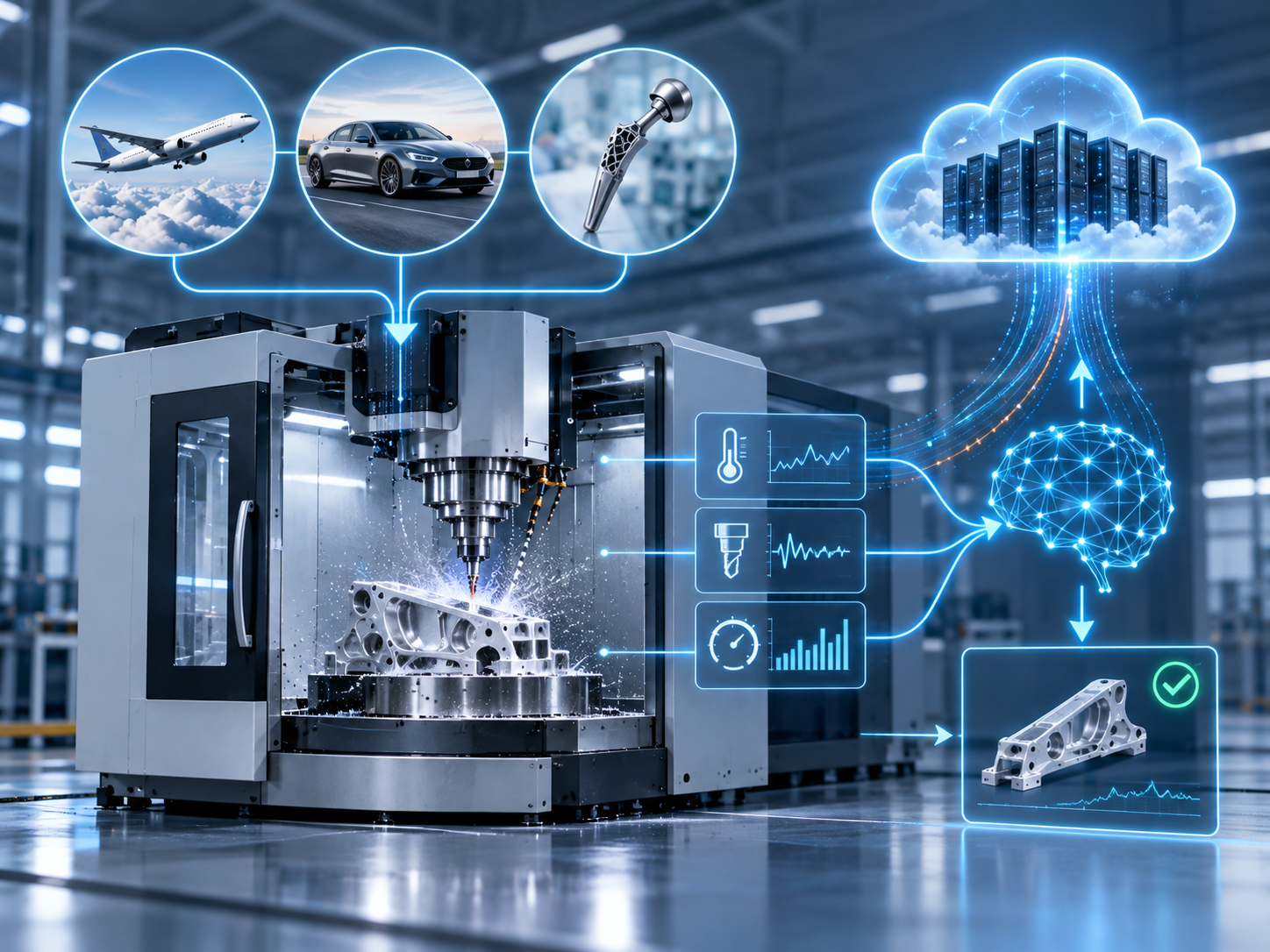
In aerospace, automotive and medical technology, manufacturers machine high-strength materials to strict quality requirements. Since so many tool and process parameters interact in machining, quality can usually only be assured by inspecting the parts manually once production is complete.
AI models can shorten these inspections if they are trained with process data from the machine. Many companies use central cloud services for this so that they do not have to finance their own digital infrastructure up front. The production data is then held outside the company.
Solution path in the research project
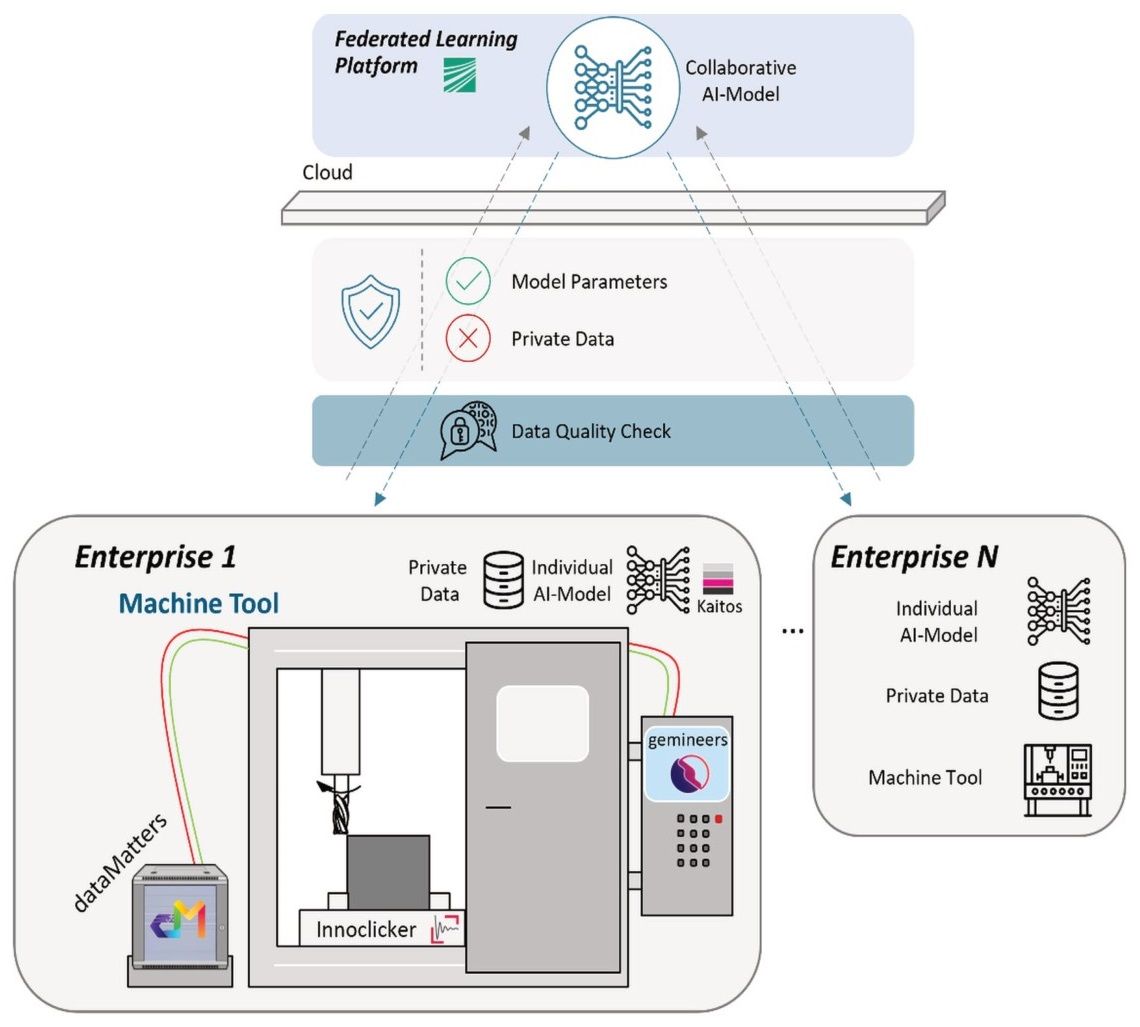
The FL.IN.NRW research project is building a learning platform on which predictive AI models are trained in a decentralised way. The method is called federated learning - each company trains the model on its own servers with its own manufacturing data. Only the model parameters are sent to a central server, where they are combined into a shared model. The manufacturing data itself does not leave the local databases.
Machining is the first use case. The model is trained with process data taken directly from the machine and detects tool wear, for example, from fluctuations in spindle load and changes in clamping pressure. If the wear causes a dimensional deviation outside the tolerance, the model reports it while machining is still in progress. Parts then only need to be inspected when there is a reason to.
The sensor-equipped clamping system
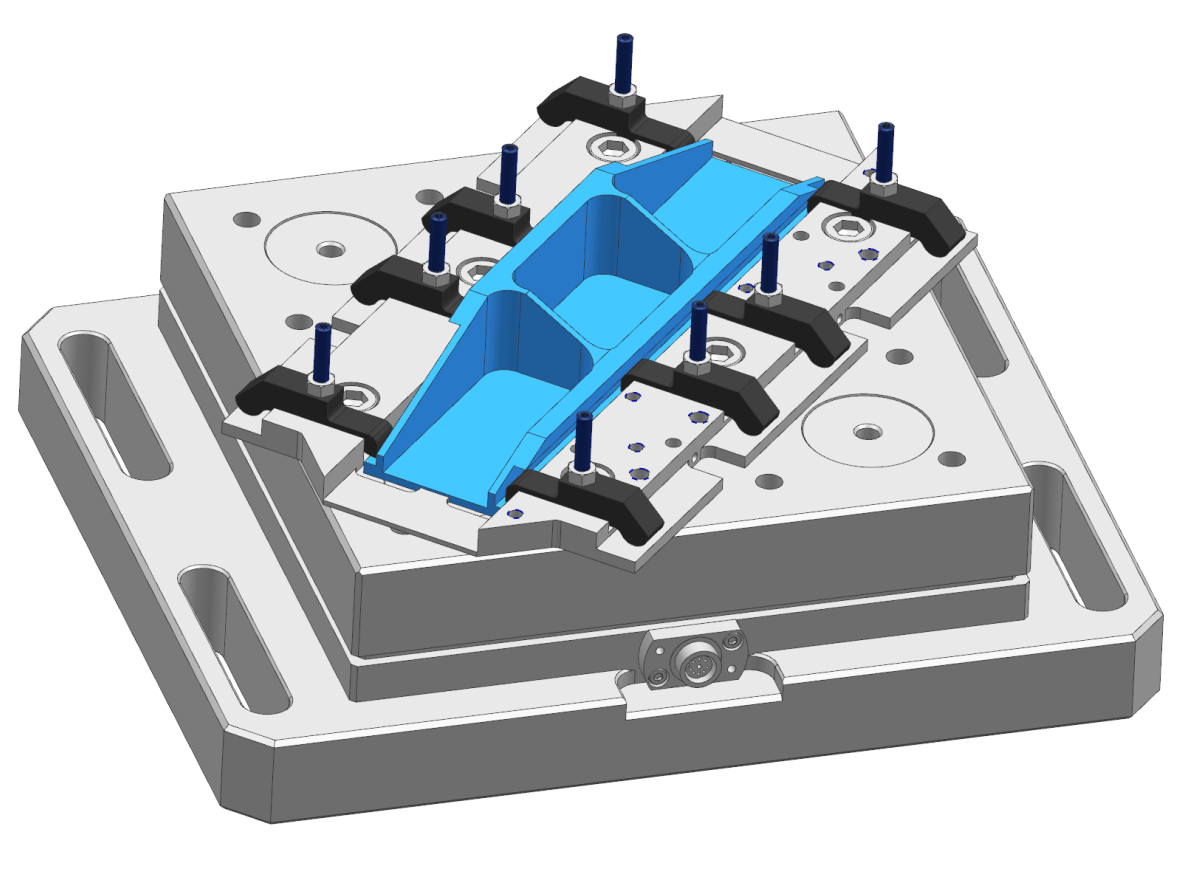
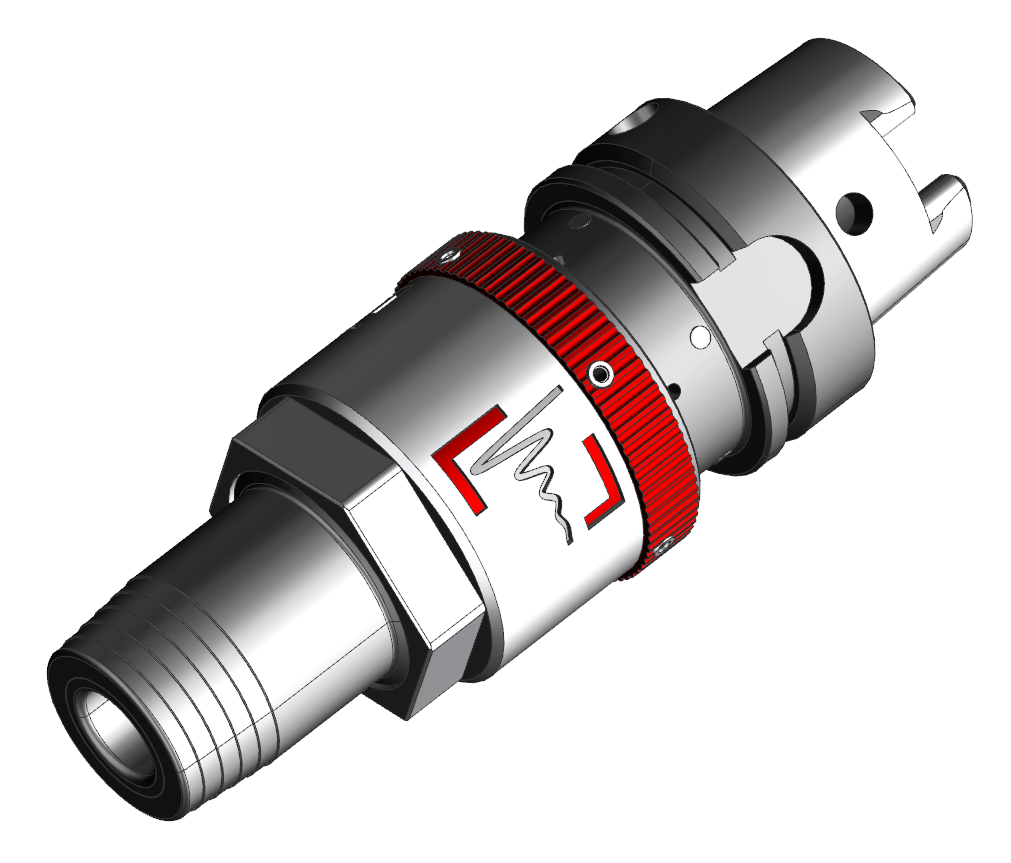
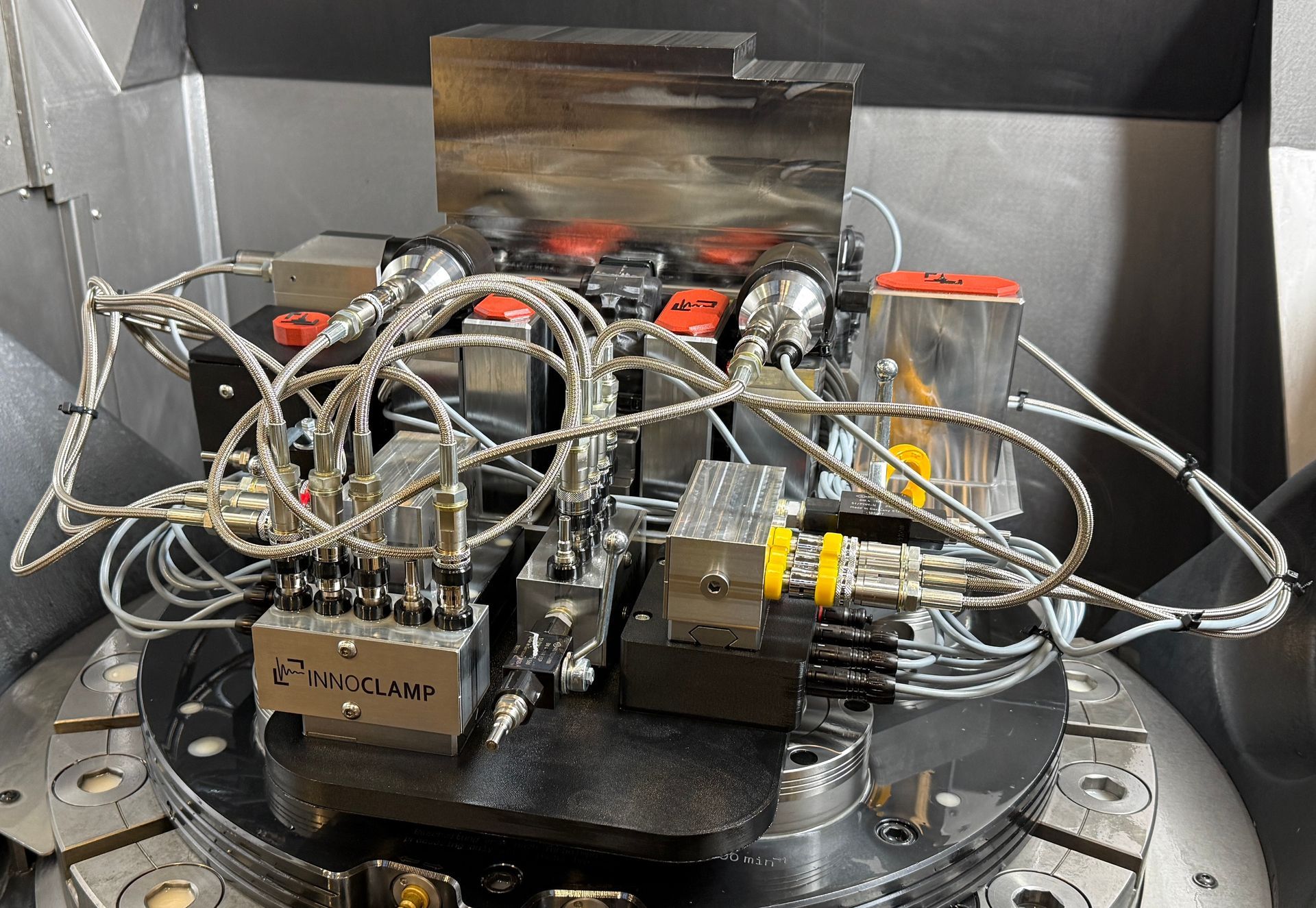
Our contribution to the project is a hydraulic clamping system that fixes workpieces on the machine table and also works as a sensor platform. It builds on our modular clamping systems, which can be reconfigured and reused for new parts and which damp vibrations through their hydraulics. In future, the system will record the forces at the individual clamping elements during milling, process them and transmit them wirelessly out of the machine tool.
The machine control supplies values such as spindle load. The clamping system adds force values directly at the workpiece, separately for each clamping element. This data is passed out of the machine wirelessly while machining is in progress.
Unsere Projektpartner



This project is funded by the European Union and the state of North Rhine-Westphalia.


Our other
Research Projects
HgroKa